Children and teeth
Children and teeth
How to care for your child’s teeth from the very first tooth.
01The first visit
Early visits are mainly about getting to know us, and we show you how to brush properly.
How to prepare your child:
- Talk about the visit calmly and positively.
- Avoid words like “hurt”, “injection” or “drill”.
- Never use the dentist as a threat.
- Bring their favourite toy.
02Which toothpaste and how much?
Fluoride toothpaste protects teeth from decay. Both the right concentration and the right amount matter.
- Brush twice a day, ideally for 2 minutes.
- After brushing just spit out the toothpaste, do not rinse with water.
- You will find the fluoride content on the tube as ppm F.
03How to brush properly
Children do not yet have the skill to clean their teeth properly on their own.
- Morning and evening; the evening brush is the most important.
- After the evening brush, only water.
- A soft children’s toothbrush, replaced every 3 months or after an illness.
- Make brushing a game: a song or a sand timer helps.
04Diet and habits
Do
- Water or unsweetened tea for thirst
- Sweets only with meals, not between them
- A cup instead of a bottle from age 1
- Cheese or vegetables as a snack
Avoid
- Falling asleep with a bottle of milk or juice
- Sweetened drinks during the day
- Sticky sweets
- Parents licking the dummy or spoon
- Dipping the dummy in honey or sugar
05Baby teeth matter
Baby teeth will fall out, but until then they have an important role:
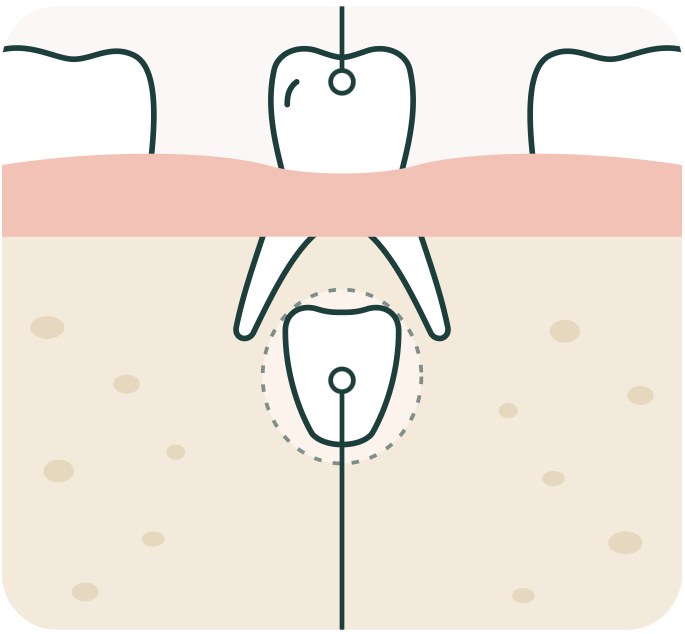
- Chewing and good nutrition
- Speech development
- Holding space for the permanent teeth
- Protecting the developing permanent teeth
Decay spreads faster in baby teeth because their enamel is thinner.
06When to see the dentist
- White or brown spots: this may be early decay
- Pain when eating or drinking, especially sweet, cold or hot things
- Swelling or a “gumboil”: this may be an infection
- A dental injury: a knocked-out, broken or loose tooth, come as soon as possible
- Your child refuses to eat or chews on one side only
We catch problems before they hurt, and build trust and cooperation along the way.
This article is for information only and does not replace an examination by a dentist. If you have any problems, book an appointment or call us.
Tips for patients
More tips
Tooth extraction
How to look after yourself after an extraction, what to do and avoid, and when to contact your dentist.
Read Preventive check-upsPreventive check-ups
How often to come, what a check-up includes, why we also check the oral mucosa, and how to prepare.
Read Dental insurance contributionsDental insurance contributions
How much each insurer contributes, who is eligible, and how to claim with VšZP, Dôvera and Union.
ReadBooking
Questions? Book an appointment
Appointments are arranged through the 3S DENT reception, by phone or online.